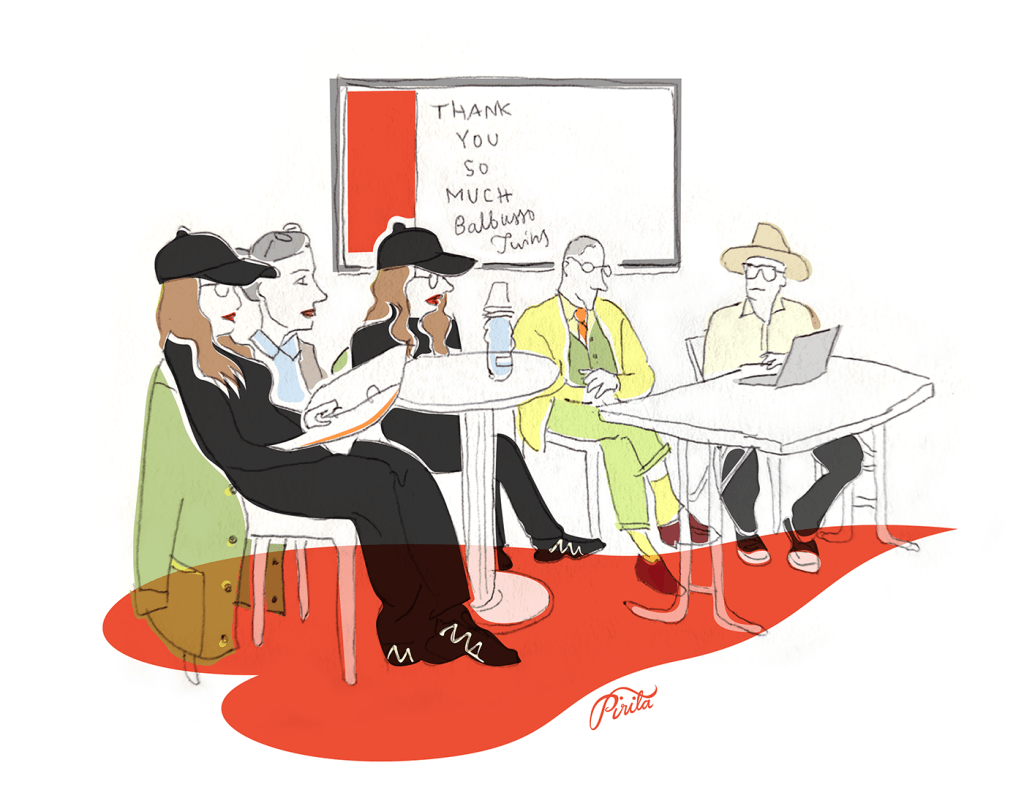
I gave a masterclass talk Drawing Reality: Authenticity and New Conventions in the AI Era on April 13th at the Bologna Children’s Book Fair (BCBF) in Bologna, Italy.
For me, the masterclass was an important summary of themes I’ve been passionate about for a long time. My main argument was that nonfiction picture book illustrators should be far more transparent about their research, and this AI era makes doing so essential as a means of fighting disinformation.
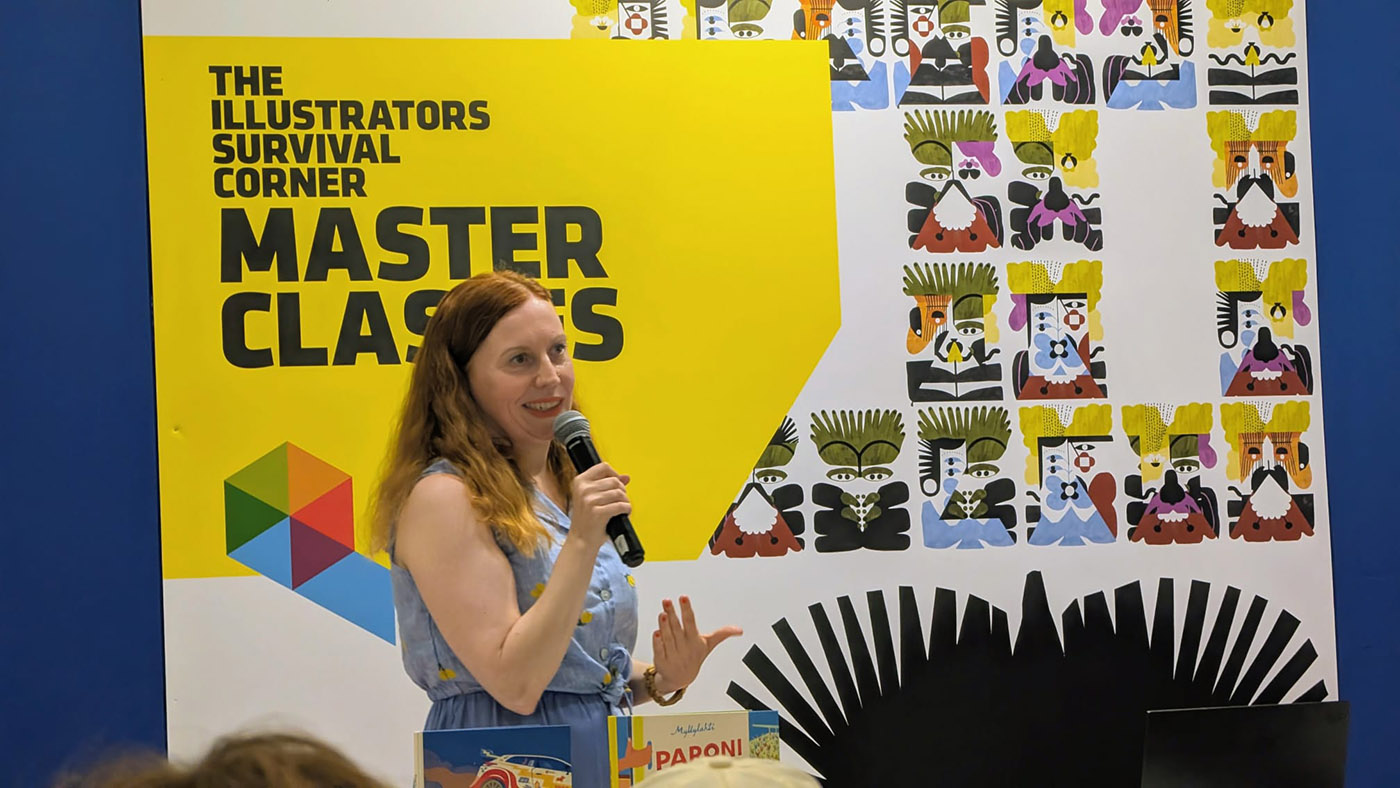
In a world where AI can generate convincing evidence for events that never happened, children’s book makers have a new responsibility to show their research. And especially illustrators, because it is the visual side of generative AI that we are mostly in trouble with.
It’s not just about evaluating if something is true: you have to evaluate the evidence. Back matter is where this can be done, but it needs to focus on the illustrations as well. You find good examples of this in the United States, where back matter is a common concept, but it is not the case elsewhere.
More about my masterclass on a Publishers Weekly article Bologna Children’s Book Fair 2026: AI Takes Center Stage.
Sketch for a collective sketchbook
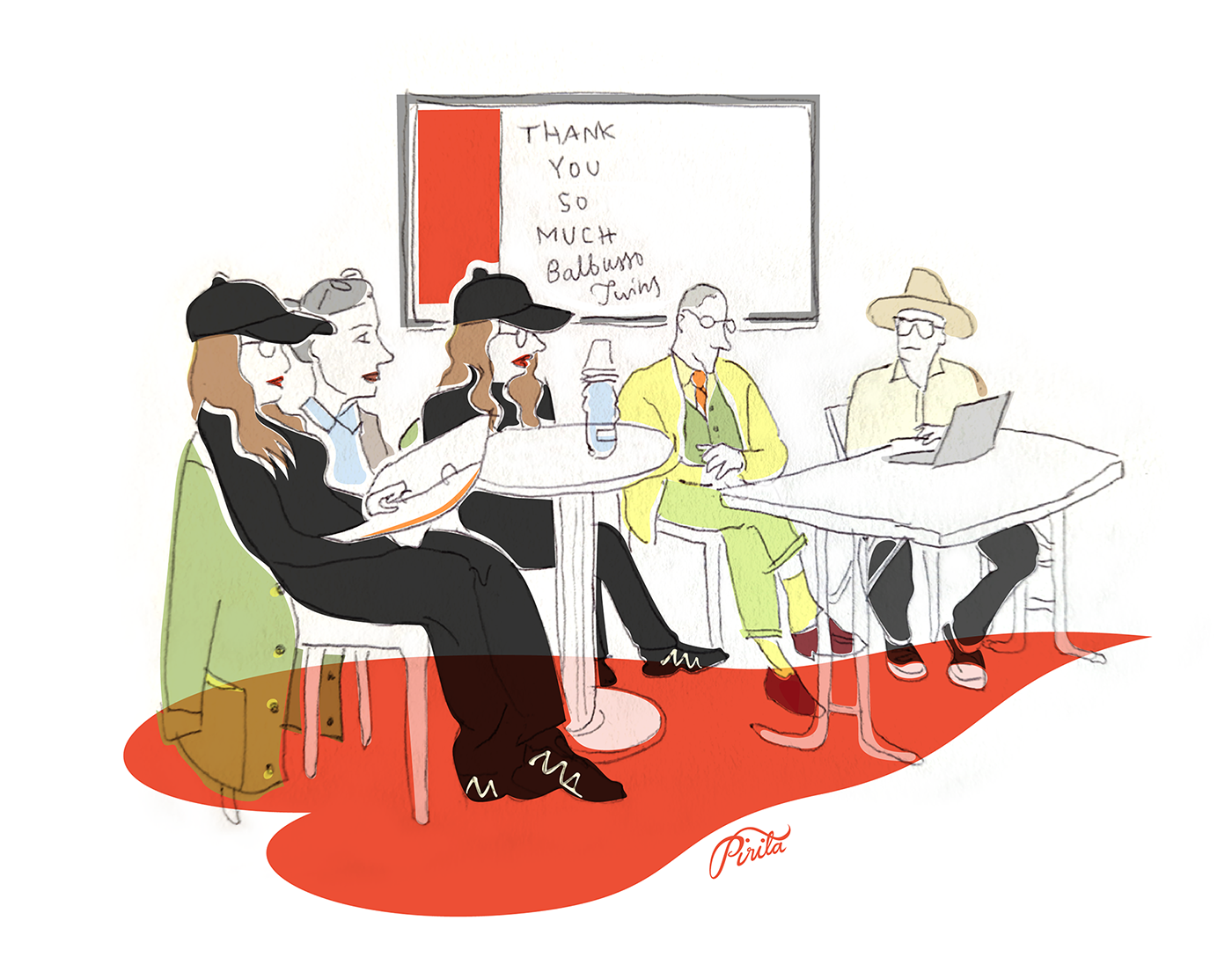
My sketch from the masterclass of Balbusso Twins was a part of a lovely Publishers Weekly article showing illustrators sketches from the fair.
BolognaRagazzi nonfiction award
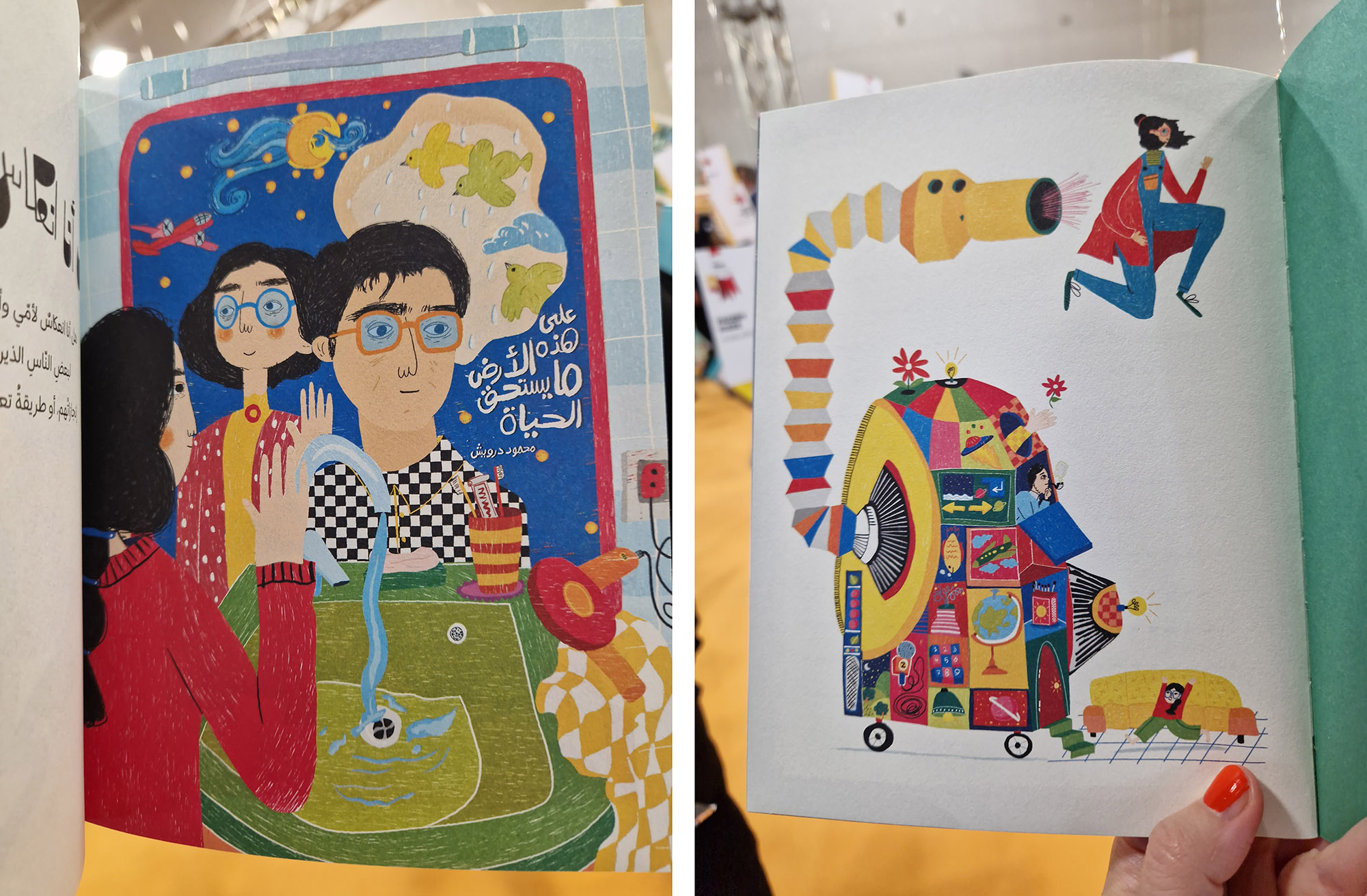
The nonfiction winner of the BolognaRagazzi Award 2026 is أنا (Who Am I? by Qais Hinti & ill. Esraa Hedery; Al Salwa Publishers 2025, Jordan).
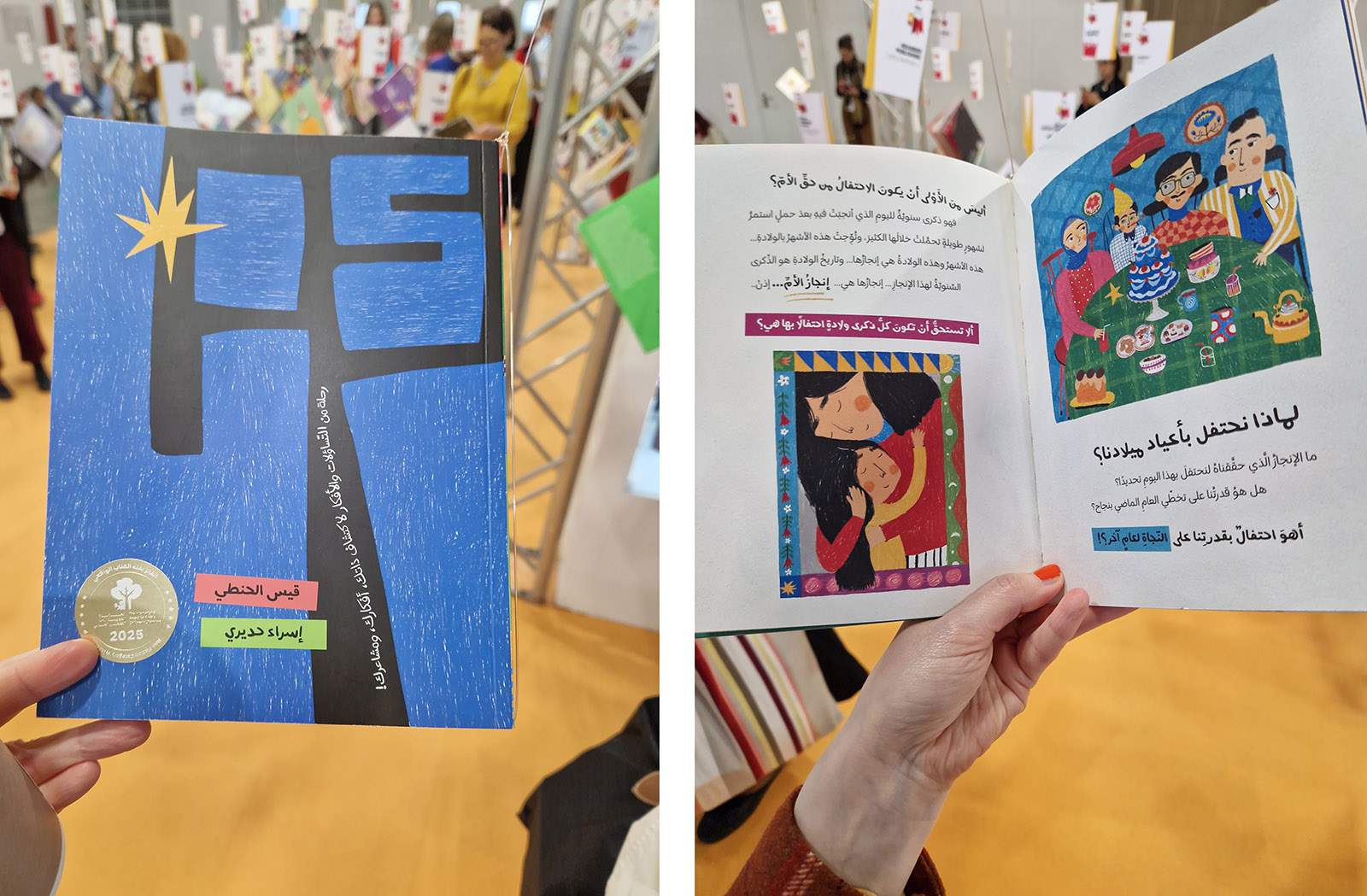
I thought this was a surprising choice to be a nonfiction winner. You would not realize it is a nonfiction book by glimpsing through it, and it is not a picture book; more like a heavily illustrated novel. The illustrations in particular look like fiction; they are showing birthday parties, bouquets of flowers growing into fish heads, chickens and lions; alongside other imaginary situations. But the book interestingly combines a lot of things.
Cathryn Mercier, the director of the Center for the Study of Children’s Literature at Simmons University served on the Bologna Ragazzi Award jury in the categories of fiction, nonfiction, fable/fairy tale, toddler, and opera prima. Altogether 4120 picture books from 73 countries and regions around the world took part this year.
Mercier kindly gave comments on the selected books (her comments in quotes).
“As a jury member, my sense of the picturebook form is very tied to the audience to whom picturebooks are typically marketed. This small book pushed beyond the expected buyers of teachers and librarians building their collections with titles for a wide range of readers. Instead, this book offered an intimate conversation and shared storytelling with the individual reader. The telling comes from the child’s voice as it reflections on a wide range of topics. The book invites the child reader into largely philosophical conversations and provides spaces in and around the art to record those reflections. It’s a book-in-the-making and respects its young audience as serious readers whose interests run beyond the realm of traditional narrative and into the hard work of self-knowing.”
In addition to the winner there were two special mentions.
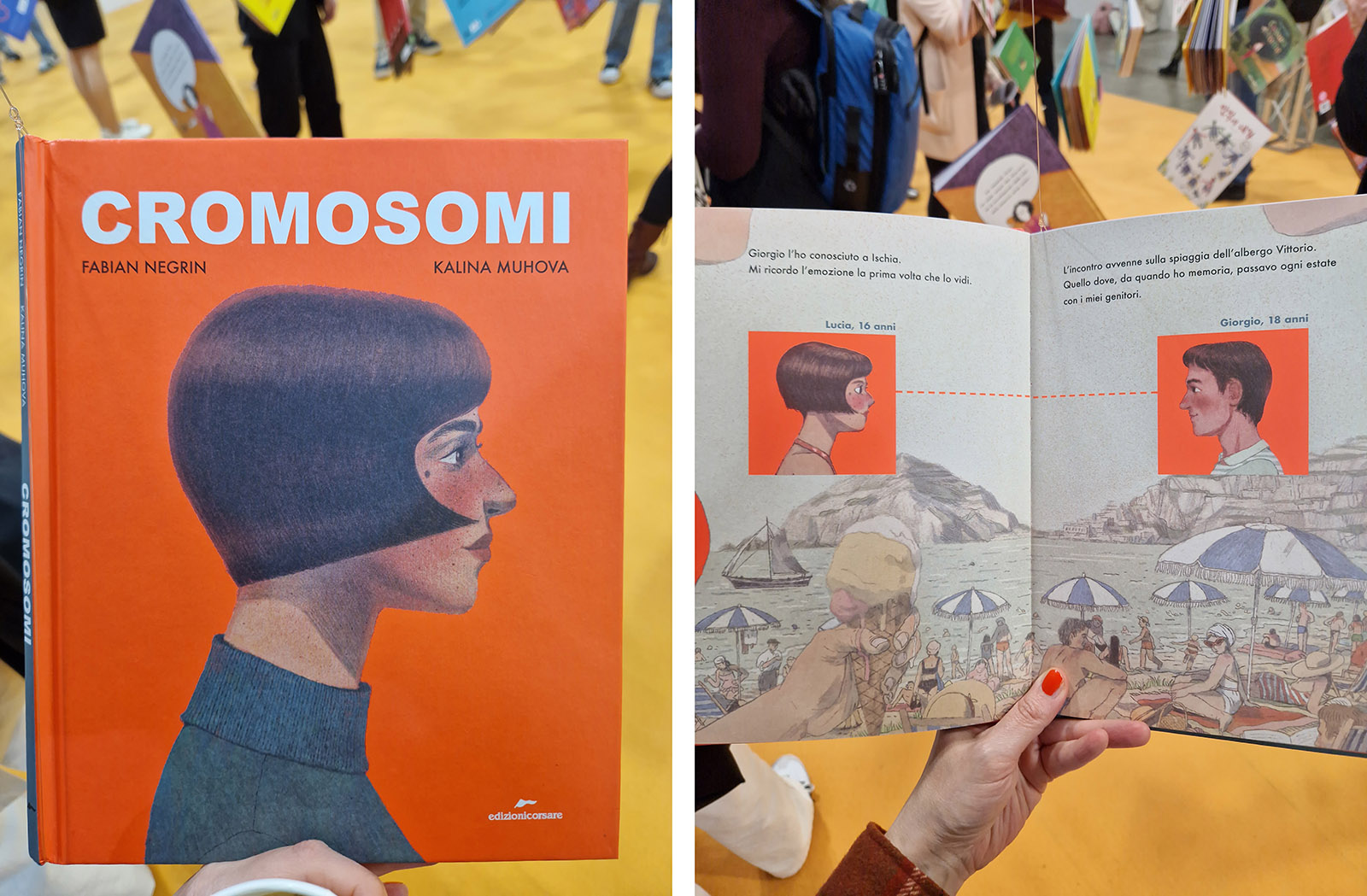
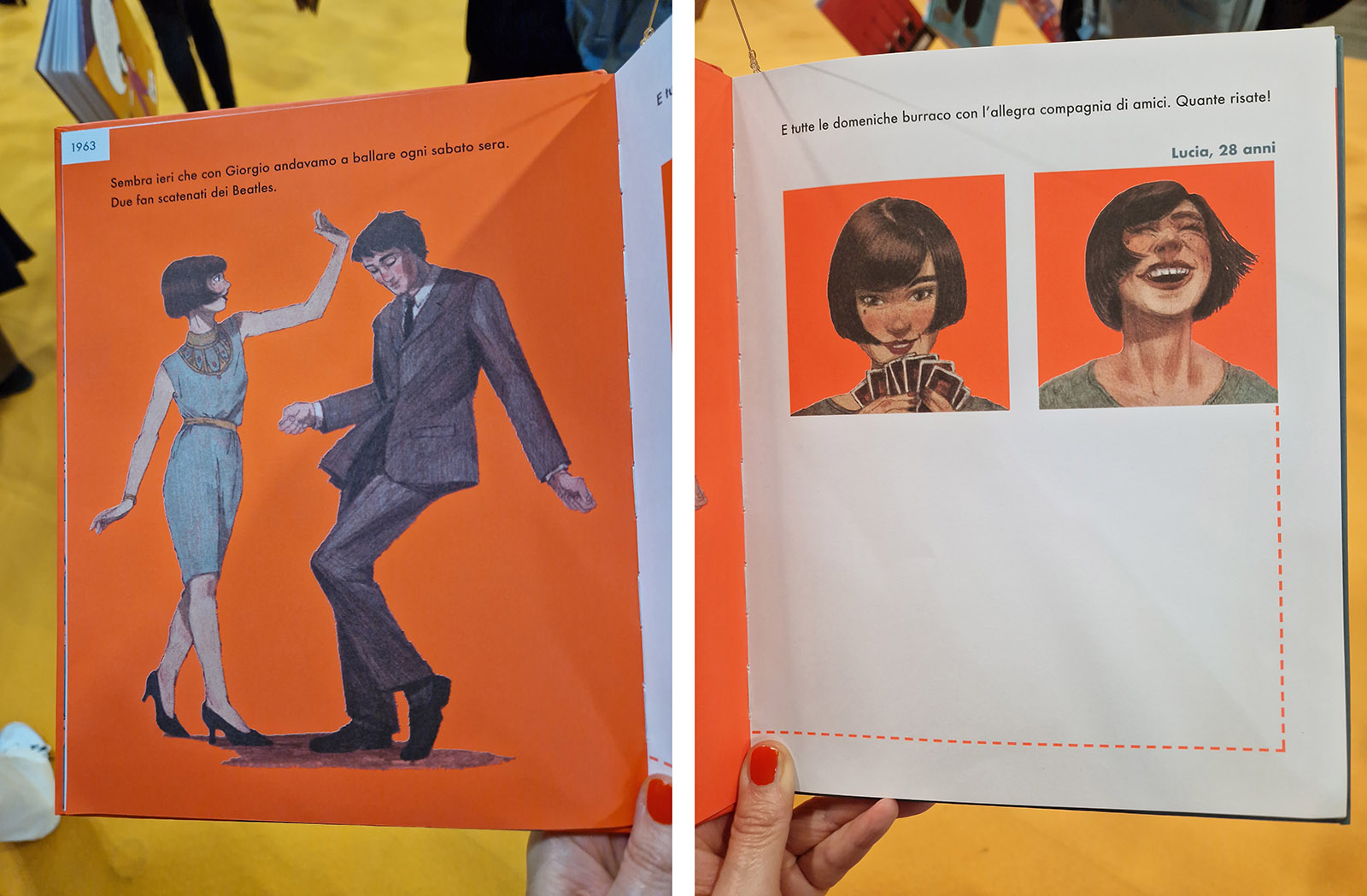
Cromosomi (Chromosomes by Fabian Negrin & ill. Kalina Muhova; Edizioni Corsare 2025, Italy) is a highly stylish and sophisticated nonfiction picture book with a wild color scheme; the most dominant colour being striking orange. The orange is so strong that I keep remembering other parts of the book as black and white; but they are not, other colours are just less intense. Cromosomi has an interesting view on time, people’s lives and ultimately to the origins of the human species.
“This unique work of nonfiction mixes the individual with the universal as it explores “What are the pieces (of biology, of time, culture, place) that make me who I am?”, “What makes me unique and where am I part of humanity?”. Clever laying of color complements the equally clever layering of historical time periods. One moves from the present to the past; end the book, start the journey in reverse. The flourescent orange seems initially shocking as a dominant color; and yet, the tinted browns that emerge as palimpsests from the past offer visual relief to the reader’s eye even as they provide space, gaps, pauses for reader engagement and consideration.”
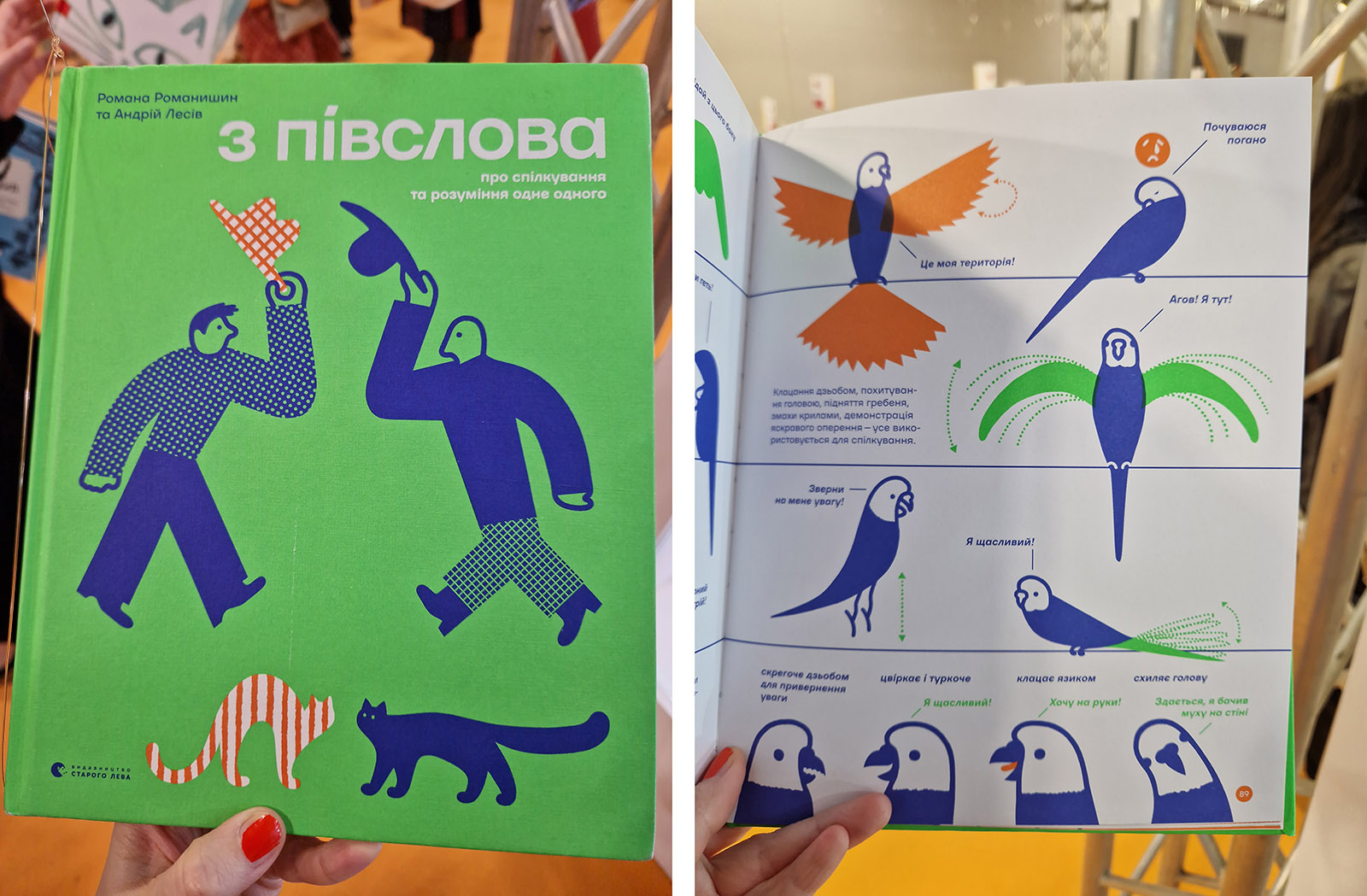
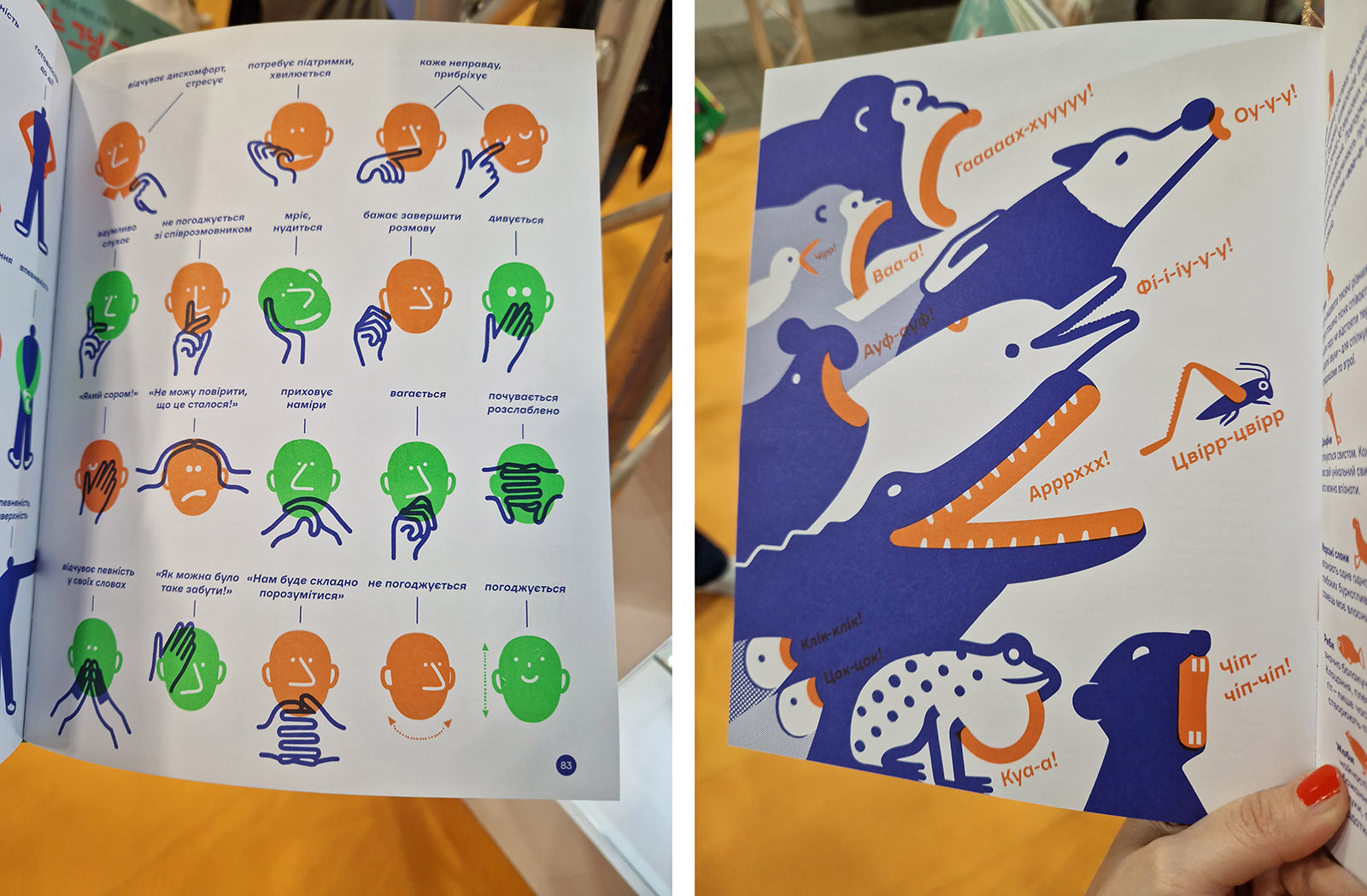
З півслова (Do You Read Me? by Romana Romanyshyn & Andriy Lesiv; The Old Lion Publishing House 2025, Ukraine) is a surprisingly thick nonfiction picture book with a theme of communication. The book makes combining illustration and data visualization look easy! I particularly admire how Romanyshyn & Lesiv are able to create silent data visualizations; you find entire spreads without text.
“With a limited color palette (cerulean blue, stark white, judiciously placed lipstick red, and brilliant neon green), this book commands its graphic presentation of communication, a relatively abstract concept. Sharp edged shapes move in and across pages as they pantomime various forms of communication (a tipped hat, an arched back, a nod). Shrewd presentation of data accomplishes the very goal of the book: It communicates with words, images, graphics, movement, color, line, shape. One might not read this book from start to finish — or maybe one will do just that. No matter, it communicates ideas through pictures, diagrams, a mix of illustrations.”
Marie Neurath & Isotype
I’m so happy BCBF highlighted the work of Marie Neurath. There was an exhibition at Padiglione Esprit Nouveau and panel discussions in the program.
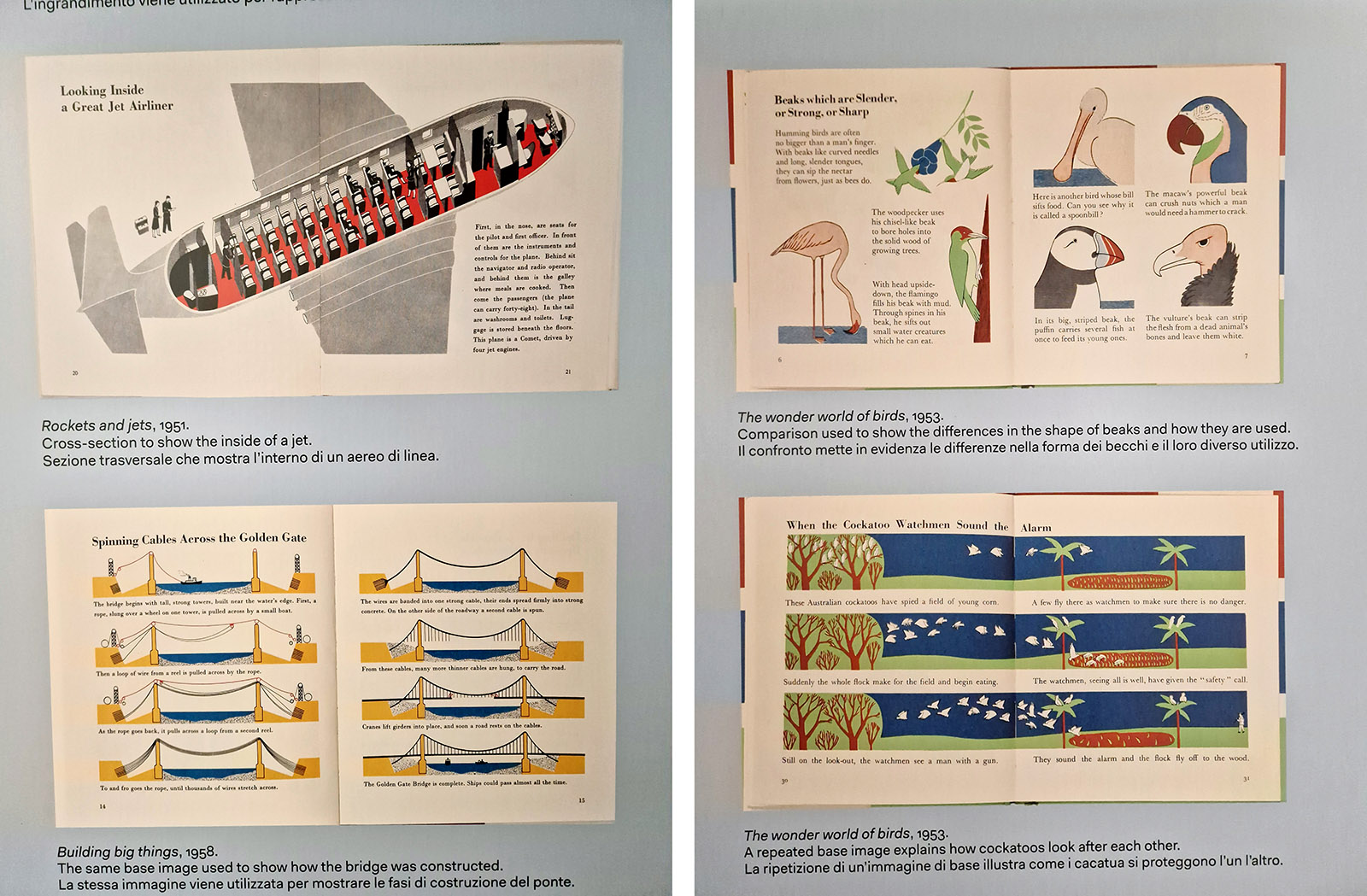
Neurath (1898-1986) was an essential part of a group called Isotype (International System of Typographic Picture Education), founded and led by Otto Neurath. In Vienna in the 1920s and 1930s, the group developed a unique and influential method of visual communication.
After the Second World War, Neurath and her team at the Isotype Institute in London produced visually striking information books. Altogether there were more than 80 children’s nonfiction books published from 1940s to 1960s.
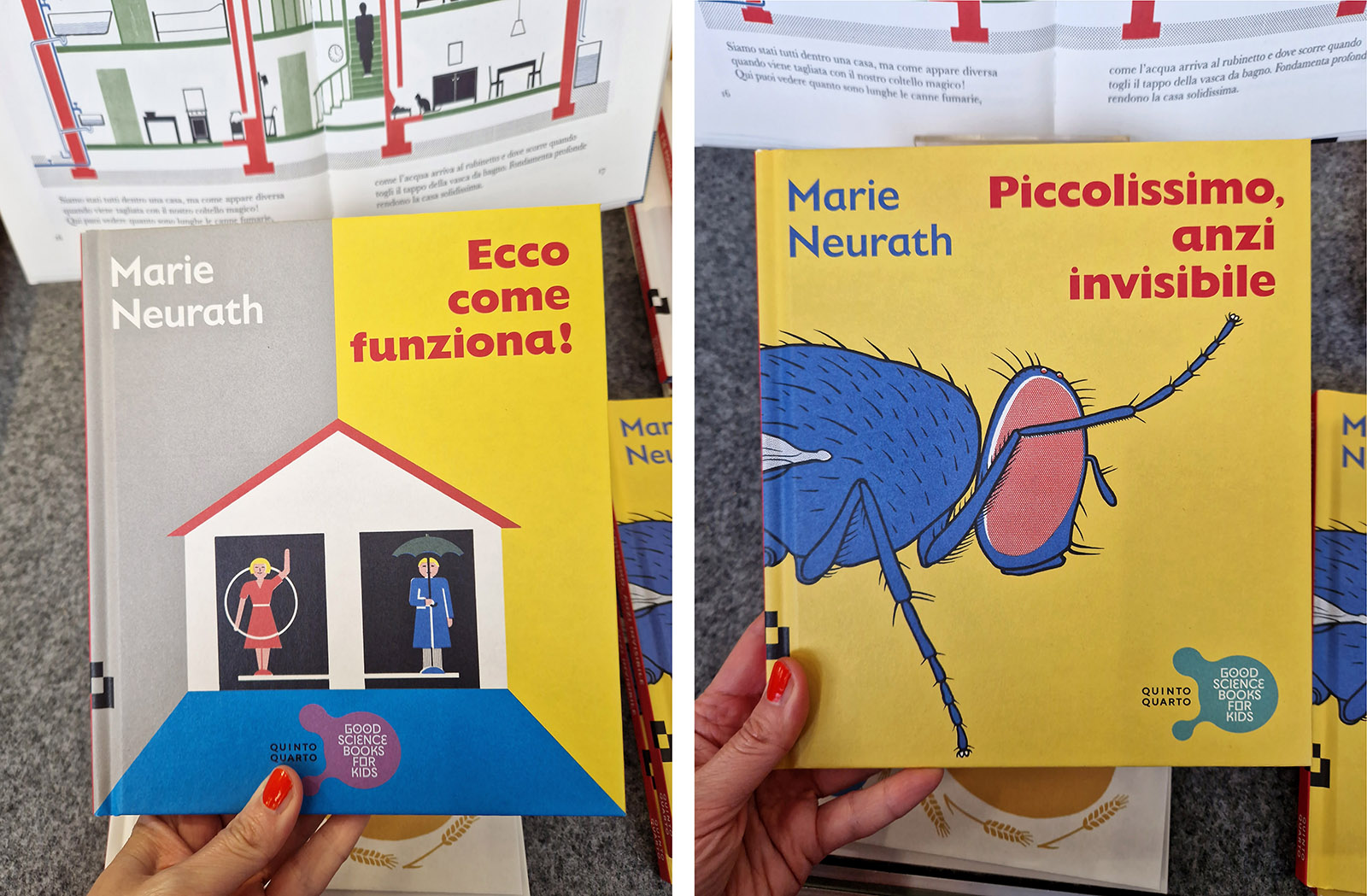
This year three of these books were published in Italy by Quinto Quarto.
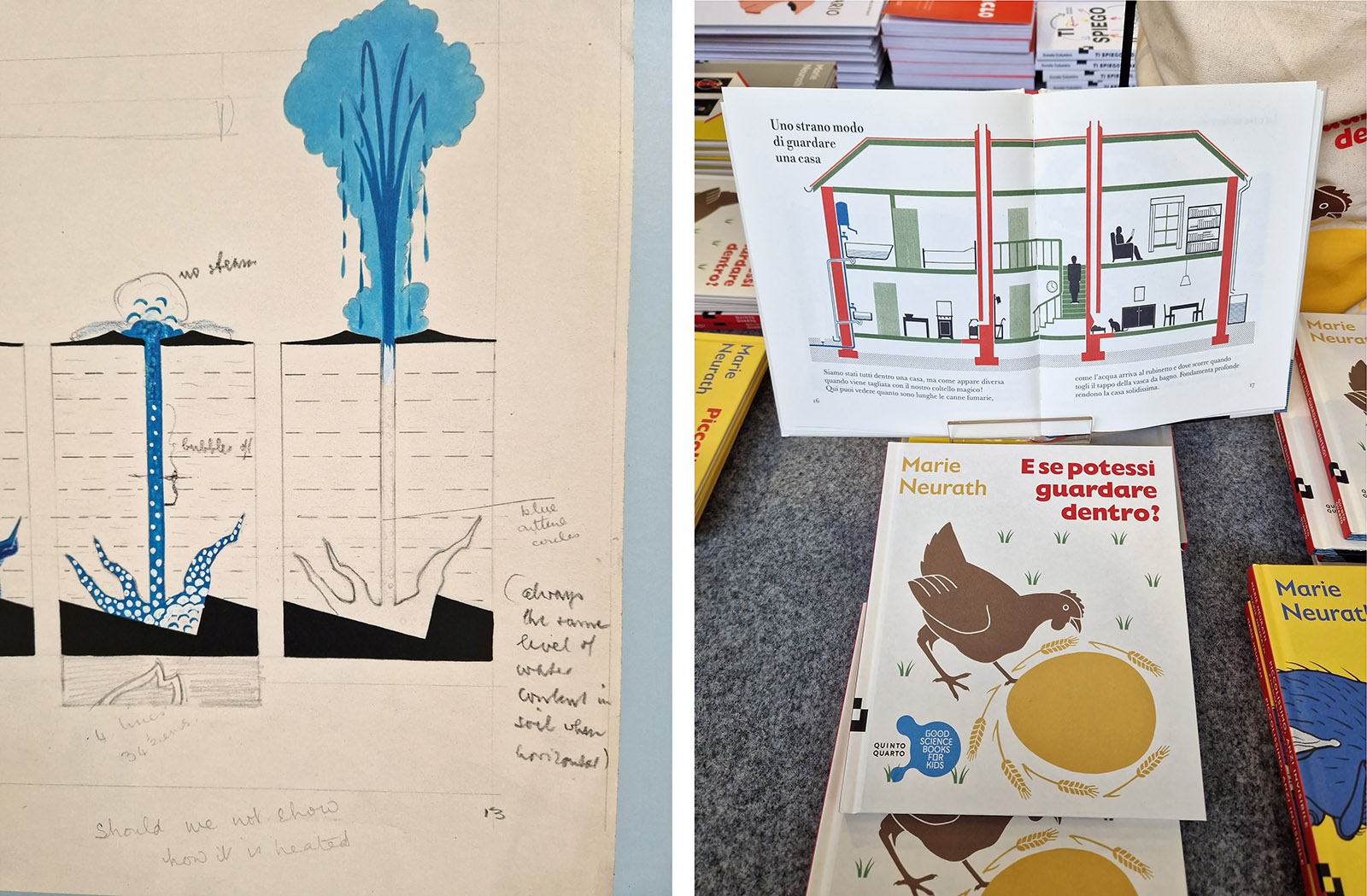
Neurath had a specific role in the team: she was a transformer, a role from the Isotype principles, which was basically what we would nowadays call an Information Designer. She gathered the information, designed and made it comprehensible. In the exhibition we saw her notes on the sketches.
The three guiding principles in her team’s work were:
- Don’t talk down to children
- Everything has to be factually accurate
- Start with something that is familiar (to children)
On research and salvation
One Day is a nonfiction picture book authored by the newly H.C. Andersen Awarded Michael Rosen. The book is illustrated by Benjamin Phillips. In the BCBF panel discussion on April 14th, the makers discussed the research, investigative work and sources behind the story of Eugene and his father Oscar and a train to Auschwitz.
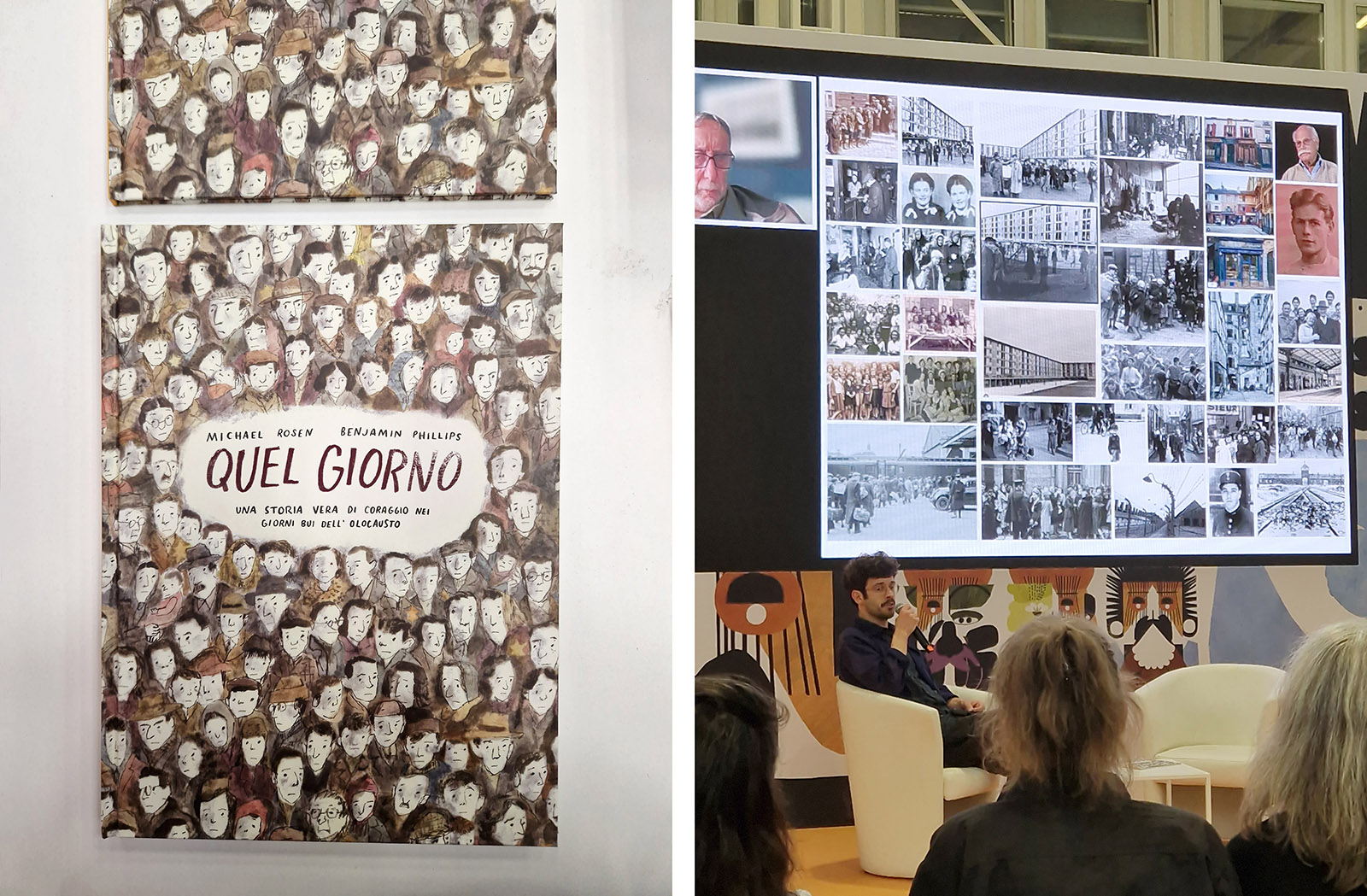
The picture on the right shows a glimpse into the illustrator’s references. On the top right, we see the main character Eugene as an old man and as a young man. Phillips chose to use imagery of Eugene as an old man as a reference to his father Oscar.
Rosen spoke interestingly of salvation. He mentioned other historical books where the makers had brought along an element of salvation or even turned them into stories of salvation. He thought this was problematic; close to wishful thinking. “If only that could have happened…”
In One Day, in the story of Eugene, there is a salvation. “But it is by the people themselves; they did it”, Rosen underlines.
A protest for book banning
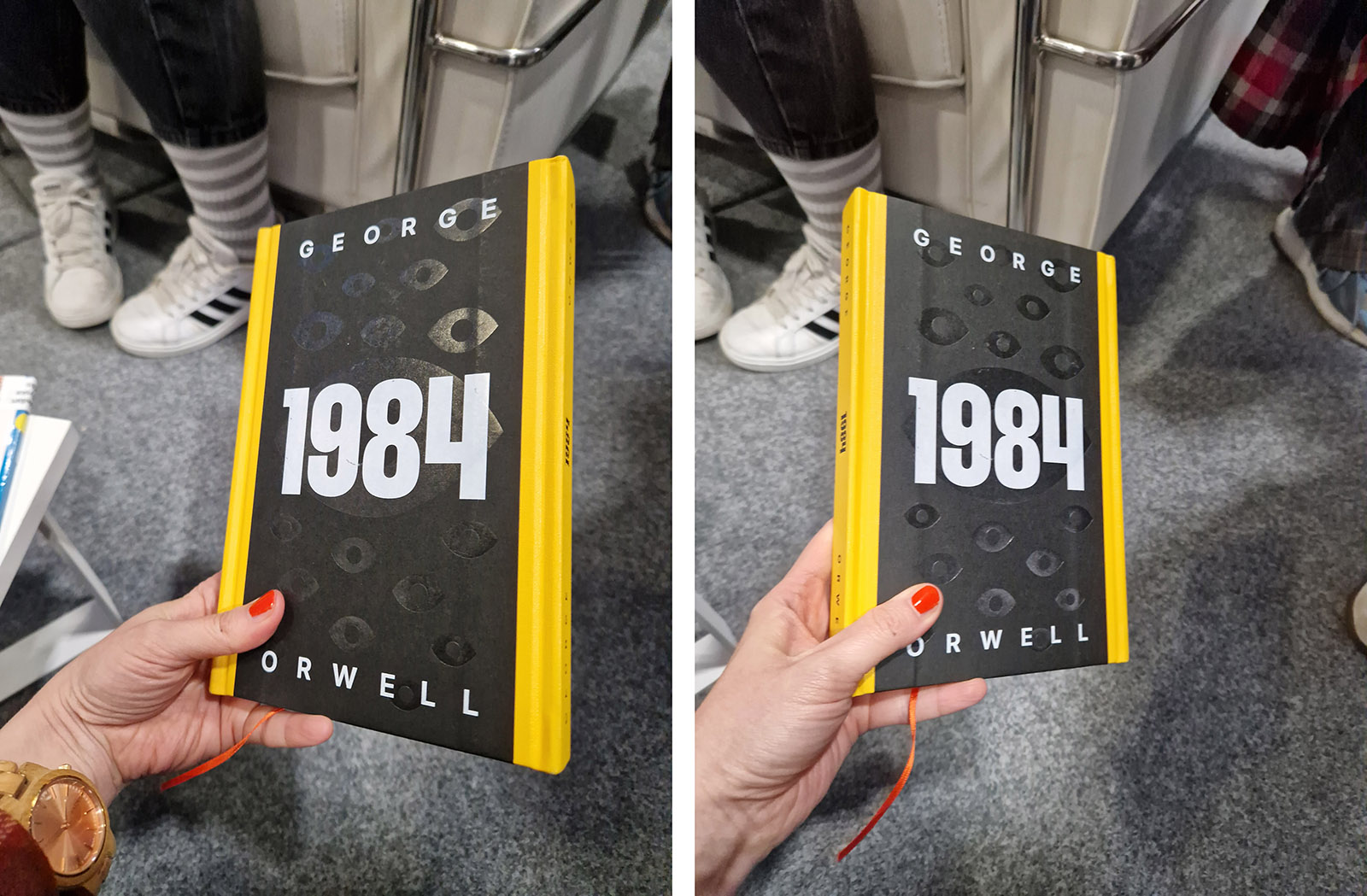
Finally, an interesting edition of George Orwell’s 1984 that I encountered at the Book Fair. It was commissioned by the Dawit Isaak Library in Malmö, Sweden, to protest the blatant censorship of books around the world. (The book is bound on both sides!) The library collects banned books, and they have a collection of more than 2000 books.
Rarely you wish for a library not to grow!
Photography: Pirita Tolvanen, except the photo of me by Ed Nawotka
Interested in more? Subscribe to my newsletter!


Leave a Reply