Sustainability headlined the 2025 Bologna Children’s Book Fair, where Mary E. Glenn of UN Publications noted during the Sustainability Summit that “the rise in media misinformation, especially on social media, is a challenge because sustainability depends on having a shared reality.”
For me, that was the key sentiment of the whole fair.
Nonfiction
A search for “nonfiction/non-fiction” in last year’s book fair program yielded nothing, while this year it returned ten results, primarily for one panel discussion: A Quest for the Last Unicorn: Finding Pleasure in Children’s Nonfiction.
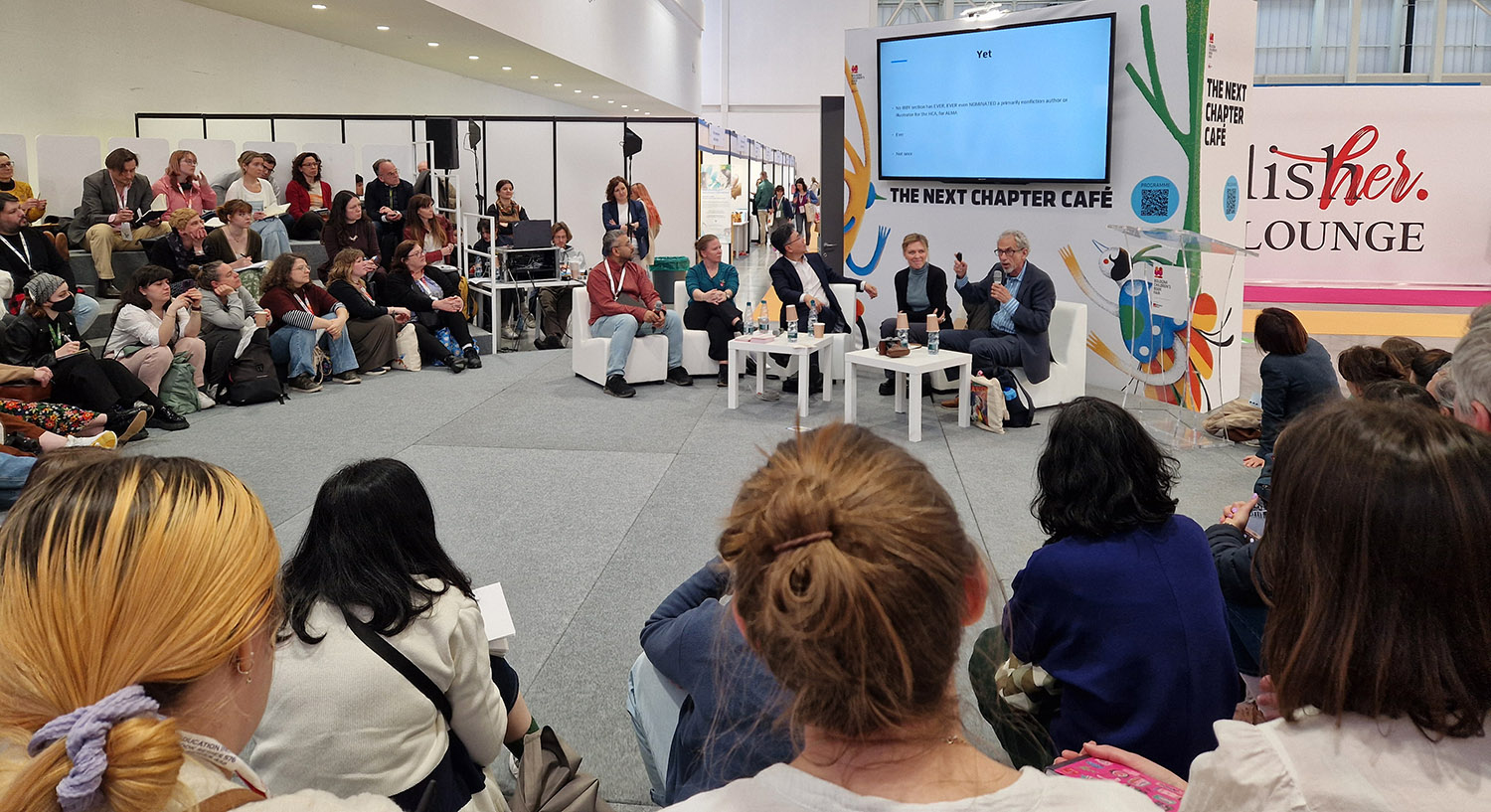
The quest for that unicorn drew an almost full house. Professor Giorgia Grilli described nonfiction as a literature of questions rather than answers—teaching how to think instead of what to think.
The world is full of incomplete, unsettled information. “We have to prepare kids for that. We don’t have all the answers,” said Marc Aronson, associate professor from Rutgers University. He pointed out that “children’s literature should show the true interconnections of the world, not just heroic quests of fiction.”


Two nonfiction search results highlighted the Bologna Ragazzi Nonfiction category winner: Per Mille Camicette al Giorno (For a Thousand Blouses a Day) by Serena Ballista with illustrations by Sonia Maria Luce Possentini (Orecchio Acerbo, Italy 2024).
It’s a beautiful, mostly black and white book about the Triangle Shirtwaist Factory Fire in New York in 1911, where 123 women and girls and 23 men, all Italian immigrants, died.
According to Ballista, this incident remains relatively unknown in Italy. Beyond telling this story, the author wanted to correct a misconception: contrary to popular belief, this tragedy did not give birth to International Women’s Day. There were similar themes, yes, such as worker’s rights. “We must not believe in fairytales, or fake origins,” she emphasized.
Sustainability
The remaining search results for nonfiction were for a portfolio review focusing on nonfiction portfolios and for a panel discussion Ukrainian Comics in Times of War.
There could be more content in the program for nonfiction. Nevertheless, nonfiction is an essential part of the fair, and sustainability as the 2025 main topic only fortifies it.

The book fair collaborates with the United Nations, which promotes their 17 sustainable development goals. This year special focus was on gender equality, right to education and poverty.
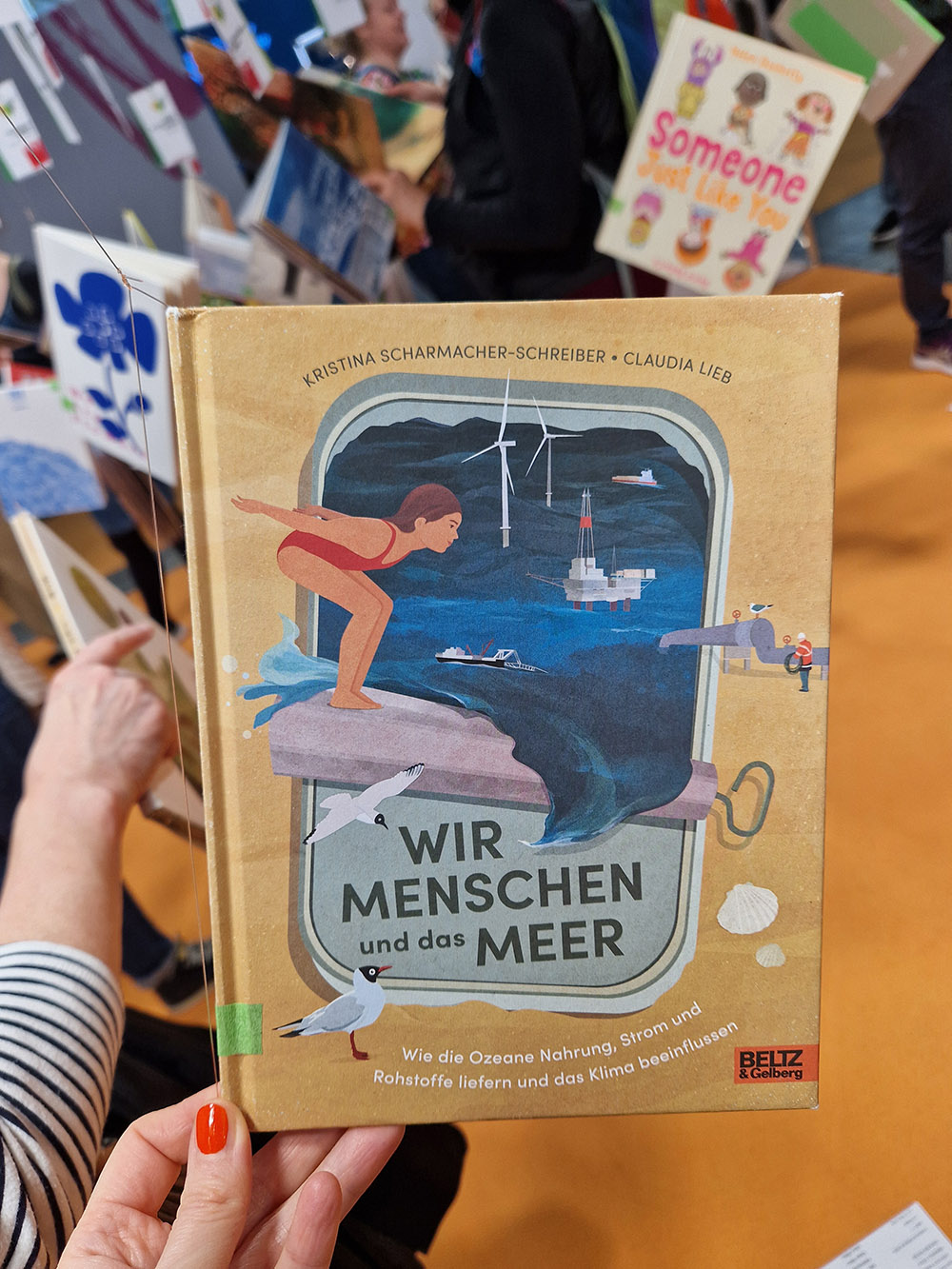
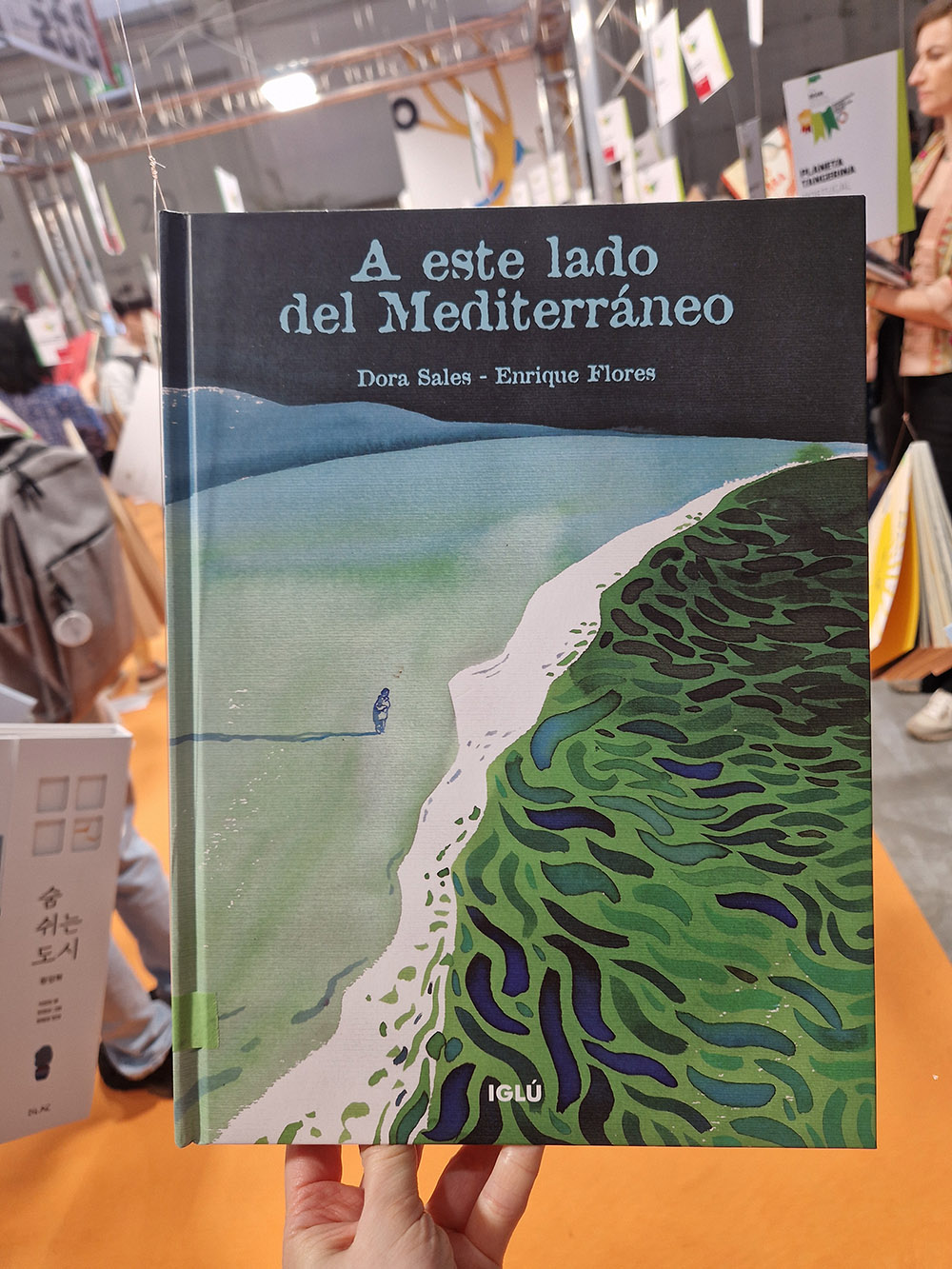


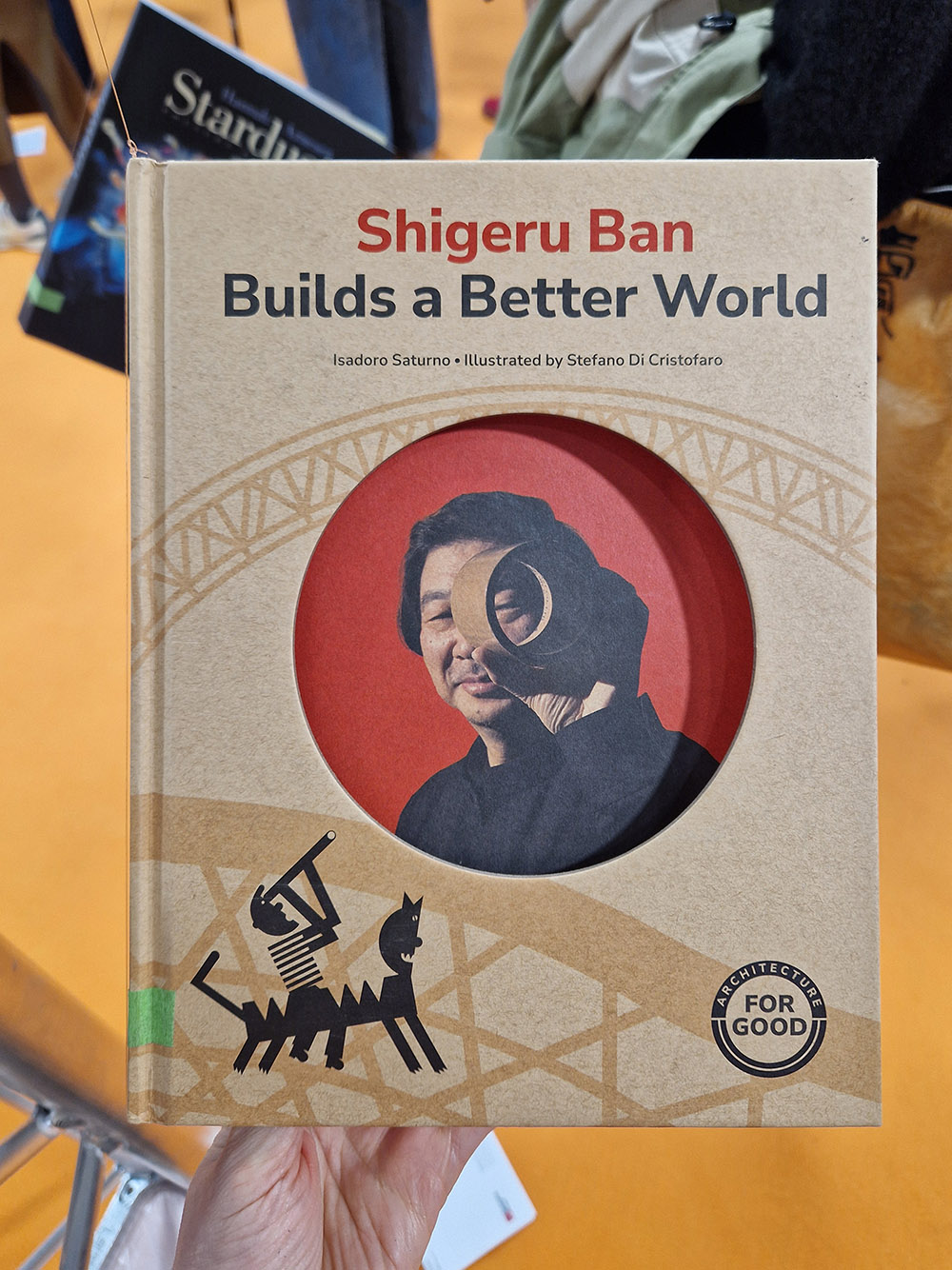
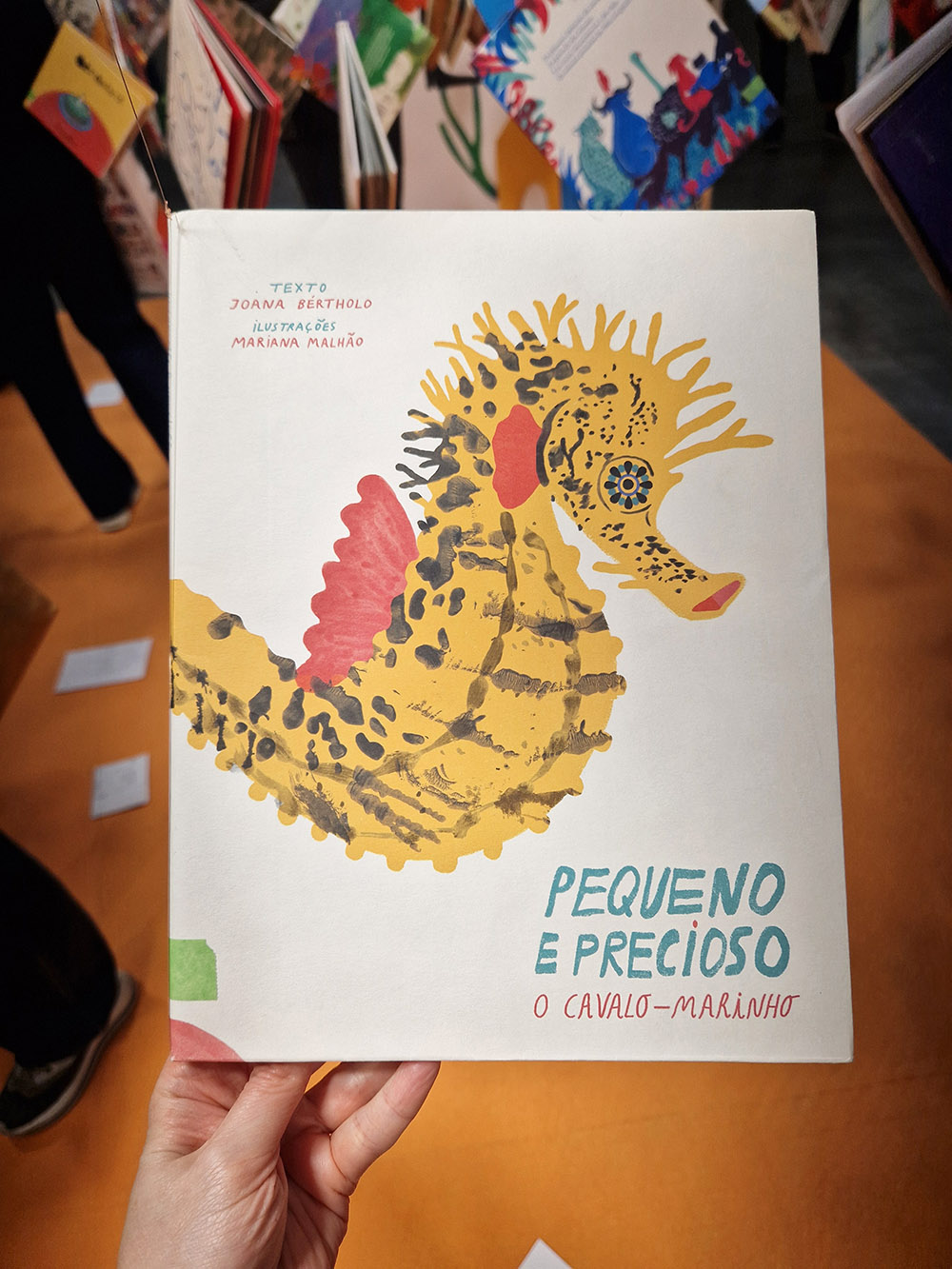
I found the sustainability exhibition among the most fascinating—even surprising—displays at the fair. The diverse book collection revealed the theme’s undeniable breadth and multidimensionality, with considerable nonfiction representation. I came back to leaf through the exhibition books several times.
Boys
Where the Boys Are? The Right Books Can Make Them Heroes was a panel discussion that walked us through many different topics, carefully backed up with data. The themes ranged from dropout statistics, mental health issues and incarceration rates among boys and men; to the publishing industry being geared towards women; how 75% of the employees of publishing houses are women and mostly white; to the importance of pictures in books in particular for boys during the early reading years.
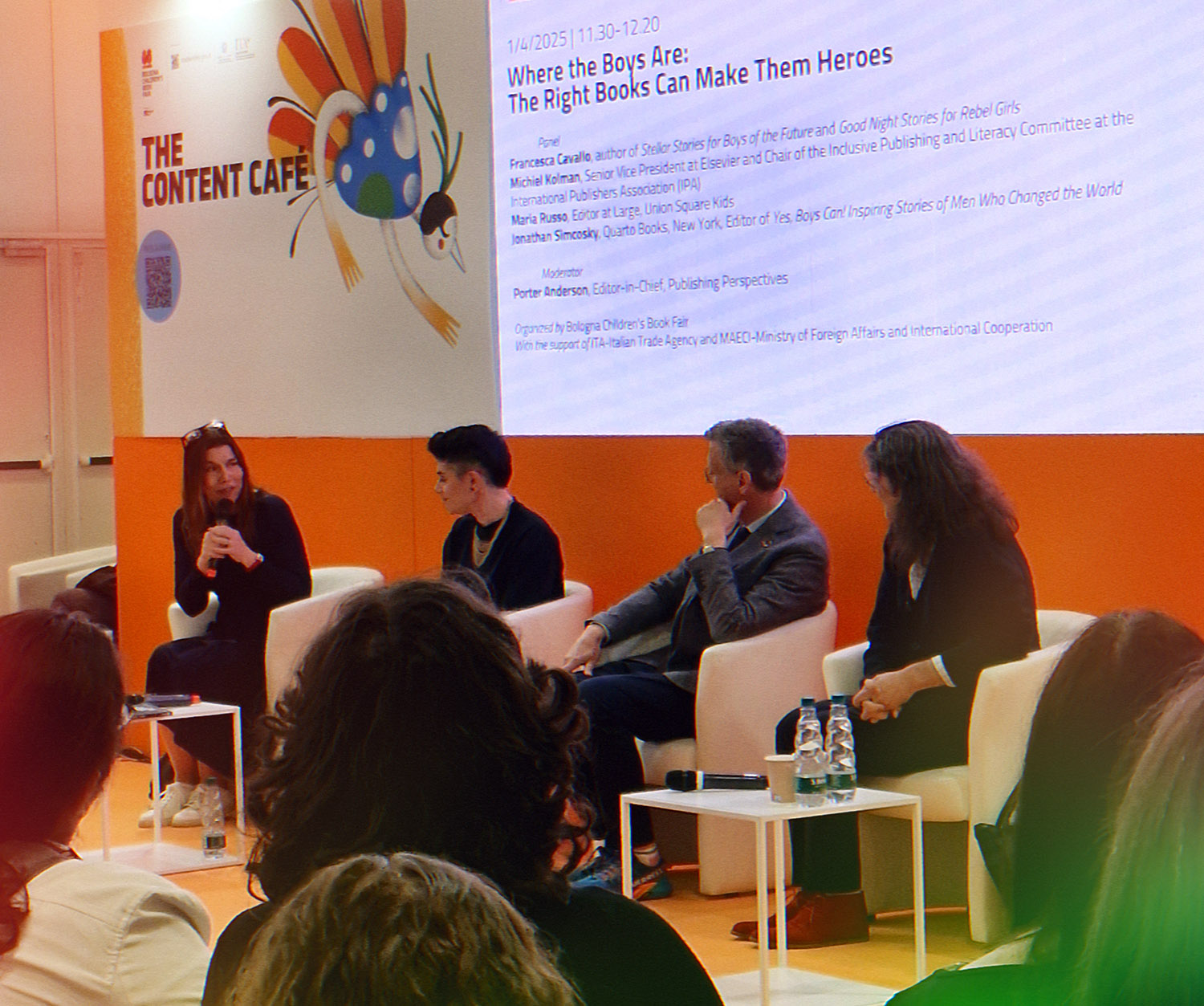
The most revealing moment came when Francesca Cavallo explained her intellectual journey from the publishing phenomenon Good Night Stories for Rebel Girls (co-authored with Elena Favilli in 2016) to her new book, Stellar Stories for Boys of the Future (Undercats, 2024).
Throughout Rebel Girls’ success, Cavallo frequently faced the question: “What about boys?”—a query that irritated her for years. She believed history already overflowed with heroic narratives of boys and men.
Cavallo started to hear the question differently. How the ones asking “didn’t try to take something away; but rather raise their boys with different role models that they themselves had had.”
Cavallo realized her unique position. With Rebel Girls she had often stated how women were not free in the traditional fairy tales. Now Cavallo, after turning yet again back to fairy tales, wanted to fact-correct herself: neither were the men role models in fairy tales as free as she had thought.
“Save the princess! Otherwise, you can’t be in the story,” she demonstrated. “But what do we know about the inner life of male characters?” What Cavallo realized was that changing how the men communicated with themselves, led to entire worlds around them to change. “They didn’t want to conquer new kingdoms,” she explained.
Cavallo concluded by saying: “Make no mistake; the battle for the souls of boys and men is the most consequential battle of our time.”
A shared reality
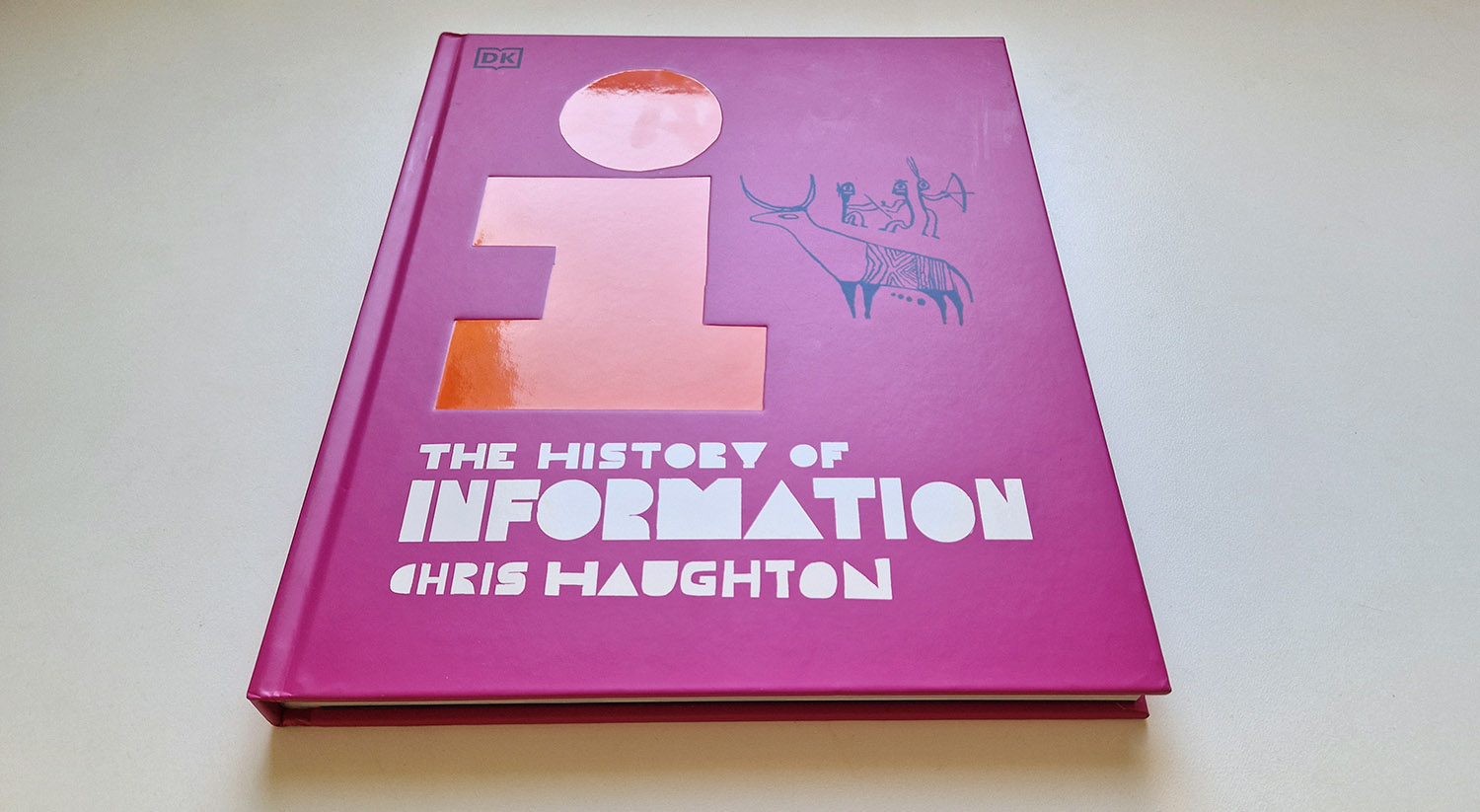
Illustrator Chris Haughton’s masterclass Telling Tales: From Picturebooks to Propaganda moved from his work with picture books to his new nonfiction book History of Information.
The book is a thought-provoking approach to information, where the information is illustrated in colour (with Haughton’s bright and recognisable palettes) and humans in black and white. In the book, the history of information is told very visually, which made sense to Haughton “because so much of it is visual. The book is kind of like a history of visual communication.”
Haughton’s book definitely contributes to the idea of a shared reality, that Mary E. Glenn held essential to sustainability. And one we need especially now in order to fight misinformation and disinformation.
And these fights and battles of our time are all present in children’s literature; and at the biggest International Children’s Book Fair in Bologna, just as they should.


Ps. Mary E. Glenn’s comment is from PW’s reporting. Thank you ❤
Proofreading: Ed Nawotka
Photography: Pirita Tolvanen, except the first one by Sari Airola
Interested in more? Subscribe to my newsletter!
 Illustrating Data
Leave a comment